
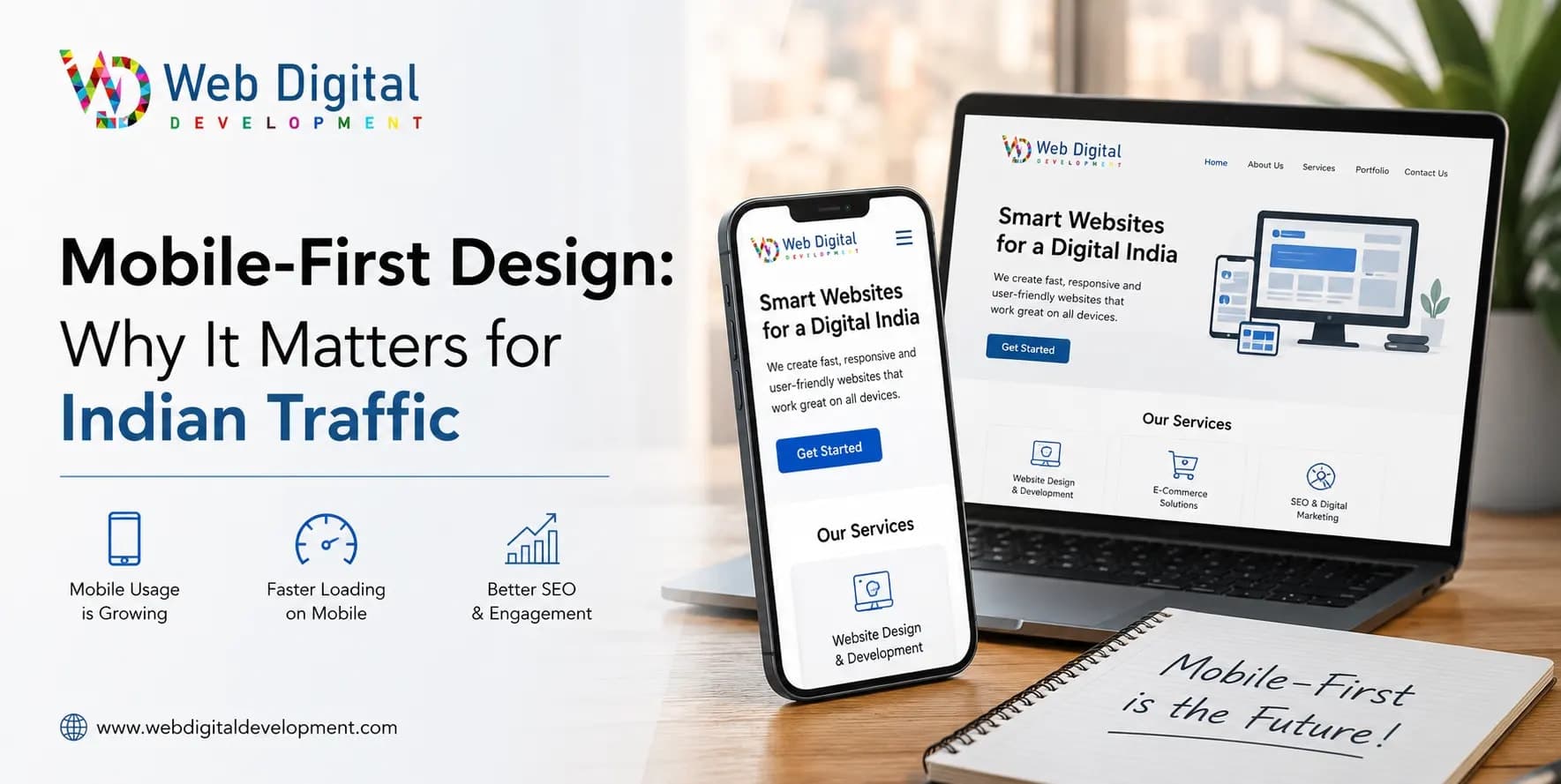
Mobile-first website design explained — what it means, why it is essential for India's mobile-heavy traffic, and how to test if your site is mobile-friendly.
Open the analytics for almost any Indian business website and one number stands out: the majority of visitors are on phones. Yet plenty of sites are still designed on a large laptop screen and squeezed onto mobile as an afterthought. Mobile-first website design flips that order, and in India it is not optional. Here is what it means and why it matters so much.
What is mobile-first design?
Mobile-first design means designing for the smallest screen first, then scaling up to tablets and desktops — rather than designing for desktop and shrinking down. It forces you to prioritise what truly matters, because space is limited. The result is a site that feels native on phones, where most of your visitors actually are.
Why is mobile-first important in India?
In India, the overwhelming majority of web traffic is mobile, often on variable 4G connections. If your site is slow or awkward on a phone, you lose most of your audience instantly. Designing mobile-first ensures fast loading, easy tapping and clear content for the devices and networks your customers really use.
- Most Indian visitors browse and buy on smartphones.
- Networks vary, so lightweight, fast pages win.
- Google uses mobile-first indexing — it ranks your mobile site.
- Touch targets and readable text reduce frustration and bounces.
How do I test if my site is mobile-friendly?
Open your site on a real phone and try to use it — read the text without zooming, tap buttons without missing, and complete a key action like an enquiry. Then run it through Google's mobile-friendly and PageSpeed tools. If anything is cramped, slow or hard to tap, your mobile experience needs work.
What does good mobile design actually include?
Good mobile design uses readable font sizes, generous tap targets (around 44 pixels), a simple menu, fast-loading optimised images, and prominent calls to action like click-to-call and WhatsApp. Content is prioritised so the most important things appear first. Nothing requires pinching, zooming or horizontal scrolling to use comfortably.
This is exactly how we work — our mobile-first design service starts at 360 pixels and tests on real devices. For the wider picture, see the must-have website features every modern site needs.
Is responsive design the same as mobile-first?
Not quite. Responsive design means a site adapts to any screen size, which is essential. Mobile-first is a strategy — start with mobile and build up — that tends to produce better responsive results. A site can be responsive but still designed desktop-first and feel clunky on phones. Mobile-first avoids that trap.
How does mobile-first design affect load speed?
Mobile-first design naturally improves speed because it forces you to prioritise. Starting from a small screen, you load only what truly matters, serve appropriately sized images, and avoid heavy desktop-only elements. The result is a lighter page that loads fast on the variable mobile networks most Indian visitors are actually using.
Speed and mobile-first go hand in hand. When you design for the phone first, you make deliberate choices about what each screen really needs, rather than cramming a desktop layout onto a small device and hoping it copes. That discipline keeps pages lean — fewer oversized images, less unnecessary script, and content ordered by importance. Because Google uses mobile-first indexing and weighs Core Web Vitals, a fast mobile experience helps both your rankings and your conversions. On a patchy 4G connection, a heavy desktop-first page can take many seconds to become usable, and most visitors will not wait that long. A mobile-first build sidesteps that by being lightweight from the start, which is exactly why it has become the default approach for serious websites across India.
Frequently asked questions
Does Google rank mobile-friendly sites higher?
Effectively, yes. Google uses mobile-first indexing, meaning it primarily evaluates the mobile version of your site for ranking. A poor mobile experience can drag down your rankings even for desktop searches. With most Indian traffic on phones, mobile-friendliness is both a ranking and a conversion necessity.
My site works on desktop — do I really need mobile design?
Yes. A site that only works well on desktop is failing most of your visitors, since the majority arrive on phones. Desktop-only or poorly adapted sites lose customers and rankings. Given India's mobile-heavy traffic, a strong mobile experience is the priority, not a secondary consideration.
Will mobile-first design hurt my desktop experience?
No. Mobile-first design scales up gracefully to larger screens, so desktop users still get a full, rich layout. Starting from mobile simply ensures the core content and actions are clear everywhere. Done well, you get an excellent experience on phones, tablets and desktops alike — not a compromise on any.
How do I make an existing site mobile-friendly?
Audit it on real phones, then fix the biggest issues: readable text, tappable buttons, compressed images and a simple menu. If the site was built desktop-first with a heavy template, a rebuild on a mobile-first, responsive foundation is often faster and more effective than endlessly patching the old one.