SEO vs Google Ads for small businesses — how they compare on cost, speed and longevity, and a practical budget split for getting leads sooner and cheaper.
With a limited marketing budget, every rupee has to work. So the question comes up constantly: should you invest in SEO or run Google Ads? The SEO vs Google Ads debate is not really either-or — they solve different problems on different timelines. This guide compares them on cost, speed and longevity, then suggests a practical split for a small business getting started.
Is SEO or Google Ads better for a small business?
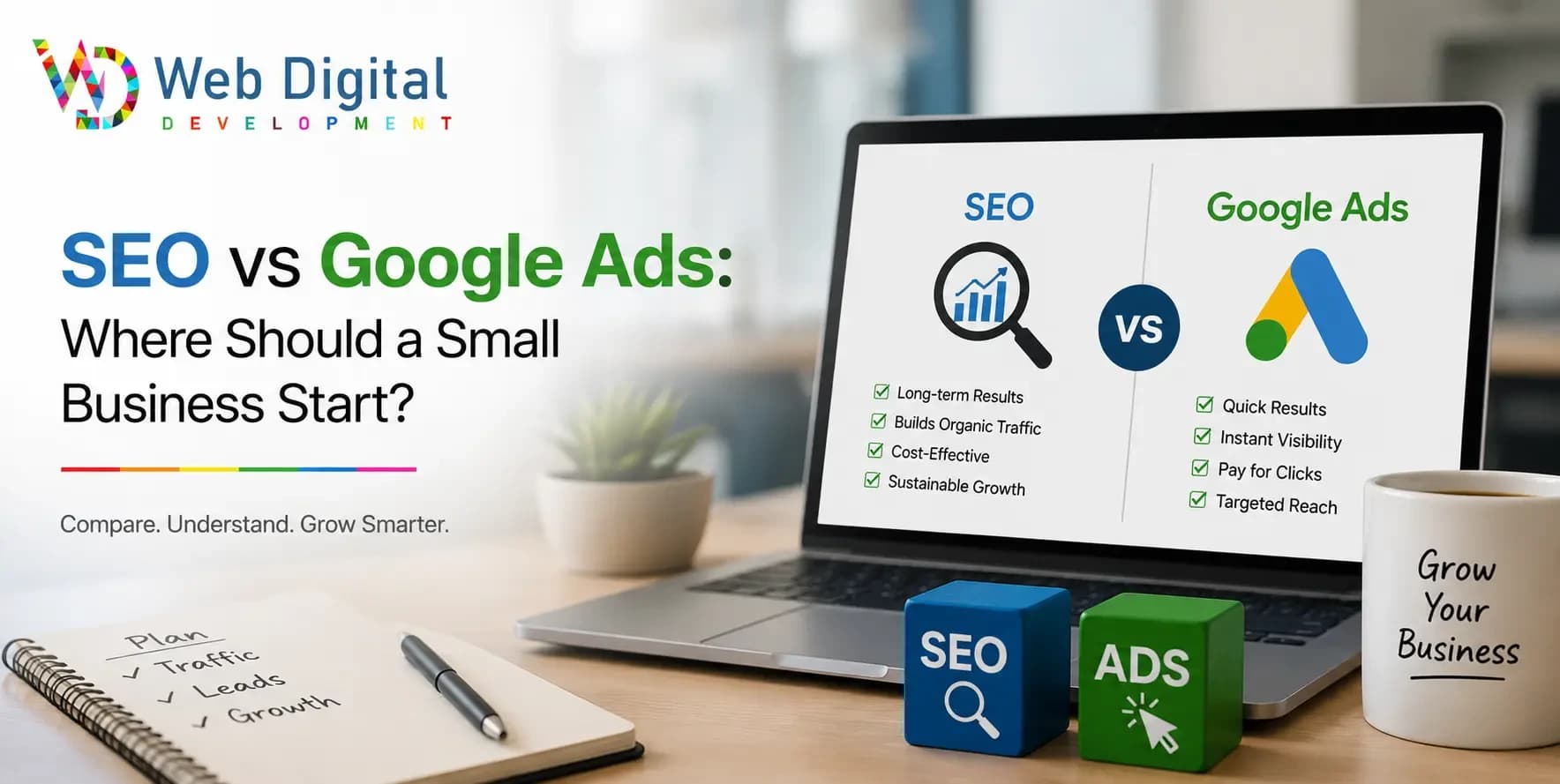
Neither is universally better — they trade off speed against longevity. Google Ads buys instant visibility but stops the moment you stop paying. SEO is slower to build but compounds into traffic you do not pay for per click. Most small businesses do best starting with a little of both, then shifting weight as SEO matures.
| Factor | SEO | Google Ads |
|---|---|---|
| Speed to results | Months | Immediate |
| Cost model | Effort upfront, low per-visit later | Pay per click, ongoing |
| Longevity | Compounds and lasts | Stops when budget stops |
| Best for | Long-term, sustainable traffic | Fast leads, testing, promotions |
How long does SEO take to work?
For competitive terms, expect three to six months to see meaningful movement, and longer for national keywords. Local SEO can be faster. SEO is a compounding investment — slow at first, then increasingly valuable as your content and authority build. It rarely delivers overnight, but the traffic it earns does not cost you per click.
How much should I spend on Google Ads?
Start with a budget large enough to gather real data — often a minimum of around ₹15,000 a month for local targeting, more for competitive or national terms. Below a certain point you cannot learn what works fast enough. Set a clear cost-per-lead goal, track conversions properly, and scale only what proves profitable.
What is a sensible budget split to start with?
A common starting point is to run modest Google Ads for immediate leads while investing in SEO for the long term — for example, splitting your budget so ads bring enquiries this month and SEO builds free traffic for next year. As SEO matures and lowers your cost per lead, you can lean less on paid clicks.
If you want help with either side, explore our SEO services and digital marketing service — we run them together so paid and organic reinforce each other instead of competing.
What about social media ads instead?
Social media ads on platforms like Facebook and Instagram are a third option, and they suit different goals. Google Ads capture people already searching for what you sell; social ads interrupt people based on interests and demographics, which is better for awareness and visual products than for high-intent, ready-to-buy searches.
Think of it by intent. Someone searching "emergency plumber Delhi" on Google wants to buy now, so Google Ads or strong SEO win. Someone scrolling Instagram is not actively shopping, but a compelling ad can create demand — ideal for products people did not know they wanted, or for building a brand over time. Many businesses use both: Google to capture existing demand and social to create new demand. The right mix depends on whether your customers actively search for your service or need to be inspired to want it. Start where intent is highest for your offer, measure the cost per lead honestly, and expand into the channel that proves it can bring profitable customers rather than just cheap clicks.
Can SEO and Google Ads work together?
Yes, and they are stronger combined. Ads give you immediate visibility and fast keyword data you can feed into your SEO strategy. SEO gradually reduces your reliance on paid clicks. Appearing in both the ads and the organic results also increases trust and total clicks. Used together, each makes the other more effective.
Frequently asked questions
Which is cheaper in the long run, SEO or Google Ads?
SEO is usually cheaper over time because you are not paying for every click. Once you rank, traffic keeps coming with only maintenance effort. Google Ads has no such compounding — costs continue as long as you advertise. Ads win on speed; SEO wins on long-term cost efficiency.
Do I need a good website for either to work?
Yes. Both send people to your site, and if it is slow, confusing or weak at converting, you waste the clicks — paid or organic. A fast, persuasive website is the foundation that makes any marketing spend pay off. Fix the site first, then drive traffic to it.
Should a brand-new business use Google Ads first?
Often, yes. A new business has no organic rankings yet, so ads can generate leads and revenue while SEO is still building. Start ads to get cash flowing and to learn which keywords convert, and invest in SEO in parallel so you are not dependent on paid clicks forever.
How do I know if my Google Ads are working?
Track conversions, not just clicks. Set up conversion tracking so you know your cost per lead or sale, then compare it to what a customer is worth. If you are paying ₹500 per lead and a customer is worth ₹20,000, ads are working. Without conversion tracking, you are guessing.