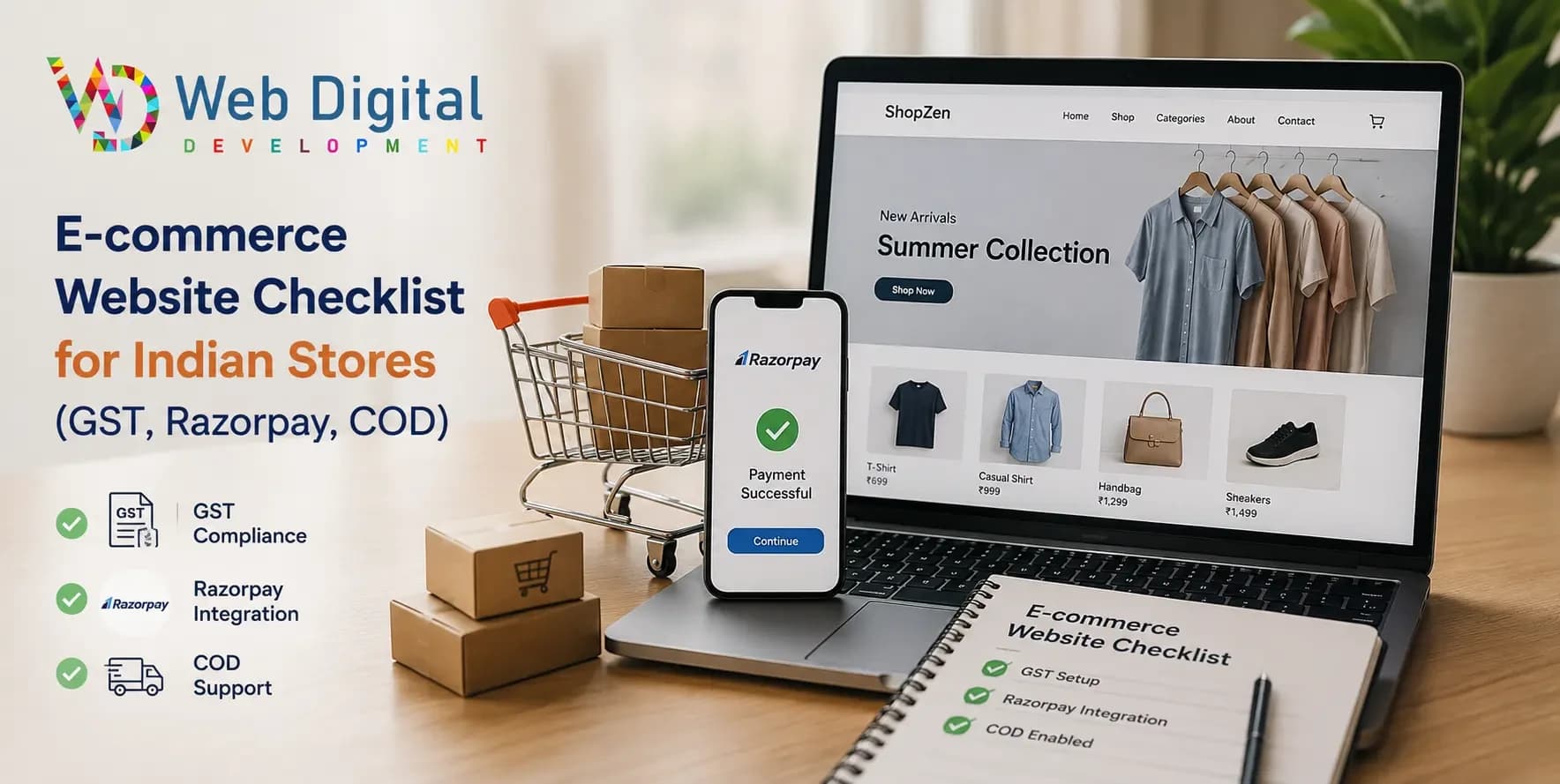
A complete e-commerce website checklist for India — payments, GST invoicing, COD, shipping and SEO — so your online store launches ready to sell.
Launching an online store in India involves more than a product page and a buy button. Payments, GST, cash on delivery, shipping and SEO all have to work before you take your first order. This e-commerce website checklist for India groups everything by area — payments, legal, shipping and SEO — so nothing critical slips through before launch day.
What do I need to start an online store in India?
At minimum you need a platform (Shopify, WooCommerce or custom), a payment gateway like Razorpay, GST-compliant invoicing if you are registered, a shipping or courier setup, clear policies, and product pages with good photos and descriptions. Get these basics right and you can legally and smoothly take orders from day one.
Payments checklist
- Integrate a gateway (Razorpay, Cashfree or PayU) supporting UPI, cards and net banking.
- Offer cash on delivery if your customers expect it.
- Test the full payment flow, including failed and refunded transactions.
- Show trust signals — secure checkout badges and clear pricing.
Legal and tax checklist
- Set up GST-compliant invoices if you are GST registered.
- Publish clear terms, privacy and refund policies.
- Display accurate pricing inclusive of taxes where required.
- Keep records of orders and invoices for compliance.
Which payment gateway is best for an Indian store?
Razorpay, Cashfree and PayU are the popular choices, and all support UPI, cards, net banking and wallets. Razorpay is the most common for small and mid-sized stores thanks to easy setup and good documentation. Choose based on fees, payout speed and the features you need; supporting UPI is essential for Indian shoppers.
Do I need GST to sell online?
It depends on your turnover and what you sell, and rules change, so confirm with an accountant. Many marketplaces require GST registration to list, and registration lets you issue proper tax invoices and claim input credit. If you are registered, your store must generate GST-compliant invoices automatically at checkout.
Shipping and SEO checklist
- Connect a courier aggregator (Shiprocket, Delhivery) for rates and tracking.
- Show shipping costs and delivery estimates before checkout.
- Write unique product titles, descriptions and meta tags for SEO.
- Add product schema so listings can show rich results on Google.
- Optimise images for fast loading on mobile networks.
Getting these right is what separates stores that sell from stores that stall. If you would rather have it built end-to-end, see our e-commerce development service, and avoid the common pitfalls in our guide to e-commerce mistakes Indian stores keep making.
What about returns, COD and building customer trust?
Returns, cash on delivery and trust signals are make-or-break for Indian online stores. Publish a clear, fair returns policy, decide how you will handle COD orders and the returns they create, and fill your store with proof — reviews, real contact details, secure-checkout badges and accurate delivery estimates — so first-time buyers feel safe paying you.
Indian shoppers, especially new ones, hesitate before paying a store they do not know. Reduce that hesitation with visible trust elements: genuine customer reviews with photos, a real phone number and address, clear policies, and recognised payment logos at checkout. Spell out your returns process — how many days, who pays return shipping, and how refunds are issued — because uncertainty here kills sales and creates support headaches. If you offer COD, plan for higher return rates and the cash-handling involved, but recognise that for many categories it significantly lifts conversions. Trust is the real currency of Indian e-commerce; the stores that win are the ones that feel safe, transparent and easy to deal with from the very first click.
Frequently asked questions
Should I use Shopify or WooCommerce for an Indian store?
Shopify is fastest to launch and easy to manage, with monthly fees. WooCommerce gives full control and works well with Indian payment quirks, but needs hosting and more setup. For under a couple of hundred products and a quick start, Shopify suits many; for control and customisation, WooCommerce often wins.
Is cash on delivery still important in India?
For many product categories, yes. A large share of Indian shoppers still prefer or trust COD, especially outside metros and for first purchases. Offering it can meaningfully lift conversions, though it adds handling and return considerations. Weigh your margins and audience, but do not dismiss COD without testing.
How many product photos should I include?
Aim for five to ten clear images per product, showing different angles, scale and key details, plus a lifestyle shot if relevant. Indian shoppers rely heavily on photos to build trust before buying. Good, well-lit, fast-loading images reduce hesitation and returns, and directly improve conversion rates.
How do I get my online store to rank on Google?
Write unique product and category descriptions, add product schema, keep the site fast on mobile, and build content like buying guides that target what customers search. Avoid duplicate manufacturer descriptions. Strong on-page SEO plus fast performance gives your store a real chance to earn free, high-intent search traffic.