
Website Designing
Pixel-perfect, mobile-first designs that match your brand and convert visitors into customers.
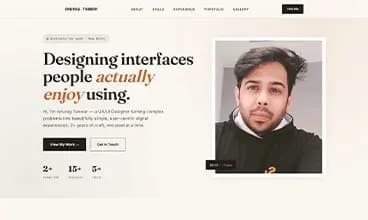
ExploreA designer's portfolio is their first impression — and it better be a good one. When Anurag Tanwar, a Jr. UX/UI Designer from Janak Puri, New Delhi, needed a personal portfolio website, the brief was simple but important: build something that looks as good as his work, loads fast, and tells his story the right way. Web Digital Development designed and developed a clean, modern portfolio site for Anurag that captures his personality, showcases his skills, and gives potential clients and employers a reason to reach out. If you're a designer, freelancer, or creative professional looking to build a portfolio website that actually gets you noticed, this case study is worth a read.
Anurag Tanwar is a UX/UI and Graphic Designer based in Janak Puri, New Delhi, with over 2 years of hands-on experience in the design industry. His work sits at the intersection of user research and visual design — he doesn't just make things look good, he makes sure they work well for the people using them. His toolkit includes Figma, wireframing, prototyping, usability testing, Adobe Suite, and a working knowledge of HTML and CSS — which means he understands not just how a design looks, but how it actually gets built. In his own words: "Simplifying complex interactions is my superpower. Every pixel has a purpose." That's not just a good quote — it's a genuine reflection of how he approaches his work. In 2+ years, Anurag has worked on 15+ projects across different industries, building a portfolio that covers everything from mobile app interfaces to graphic design work. He's actively available for new projects and freelance collaborations, and was looking for a website that would reflect that availability while making a confident first impression on anyone who landed on it.
Anurag came to us with a problem that a lot of designers face — ironic as it sounds. He could design for other people's products all day long, but designing his own portfolio from scratch, building it, and making it rank on Google? That's a different challenge entirely. There were a few specific things he needed the website to do: First, it needed to look impressive — instantly. In the design world, your portfolio is your resume, your interview, and your first meeting all rolled into one. A potential employer or client makes up their mind within seconds. The design had to communicate skill before a single word was read. Second, it needed to be personal, not templated. A lot of designer portfolios look like they were pulled from a Behance theme. Anurag wanted something that felt like him — clean, purposeful, and a little bit bold. Third, the website needed to showcase his range. UX/UI work is visual, but explaining it requires context — what was the problem, what was the process, what did the final solution look like? Presenting this well for 15+ projects without the website becoming overwhelming was a real design challenge. Fourth, the site needed to actually be found. A beautiful website that no one sees doesn't help. Basic SEO — page titles, metadata, structured content — needed to be in place so recruiters and clients searching for UX/UI designers in New Delhi could find him organically. And finally, it needed a clear, easy way to hire him. "Available for work" is great to say, but the website needed to back that up with a smooth contact experience that didn't make people hunt for a form.
We started by spending time understanding how Anurag works and what he wants to be known for. A portfolio website isn't just a gallery — it's a narrative. Every section, every word, every animation either adds to that story or distracts from it. The visual design took its cues directly from Anurag's own philosophy — clean, minimal, purposeful. We used a bold typographic approach with generous white space so his work could breathe and his projects could speak for themselves. Nothing about the design competed with the content. The site structure was built around the way a real employer or client thinks when they visit a portfolio. They want to know: Who is this person? What can they do? Have they done it before? And how do I get in touch? The navigation reflects exactly that — About, Skills, Experience, Portfolio, Gallery, and a direct "Hire Me" section. No fluff, no confusion. The Skills section was designed to do double duty — it communicates capability to a human reader, and it feeds Google the right keywords. Terms like UX Design, UI Design, Figma, Wireframing, Prototyping, Usability Testing, Adobe Suite, and HTML/CSS are woven naturally into the page content, not stuffed in awkwardly. The portfolio section was built to handle multiple projects without feeling like a scroll-forever nightmare. Each project entry gives just enough information to be interesting — the hook, the visual, and a way to go deeper. The focus is on quality of presentation, not quantity of clicks. We also built in a stats section right in the hero — 2+ Years Experience, 15+ Projects, 5+ Tools — because numbers tell a story faster than paragraphs. It gives a first-time visitor an instant anchor. The "Hire Me" contact section was kept intentionally simple and low-friction. No unnecessary fields, no complicated form — just a clear invitation to reach out, paired with Anurag's availability status and location. For a designer looking for freelance work or full-time opportunities, this directness matters. The site was also built to be fully mobile responsive, because a significant number of recruiters and hiring managers review portfolios on their phones. A broken mobile layout is a missed opportunity.
Delivered in about 5 weeks, from first call to launch.
The service behind this project — explore what we can do for you.