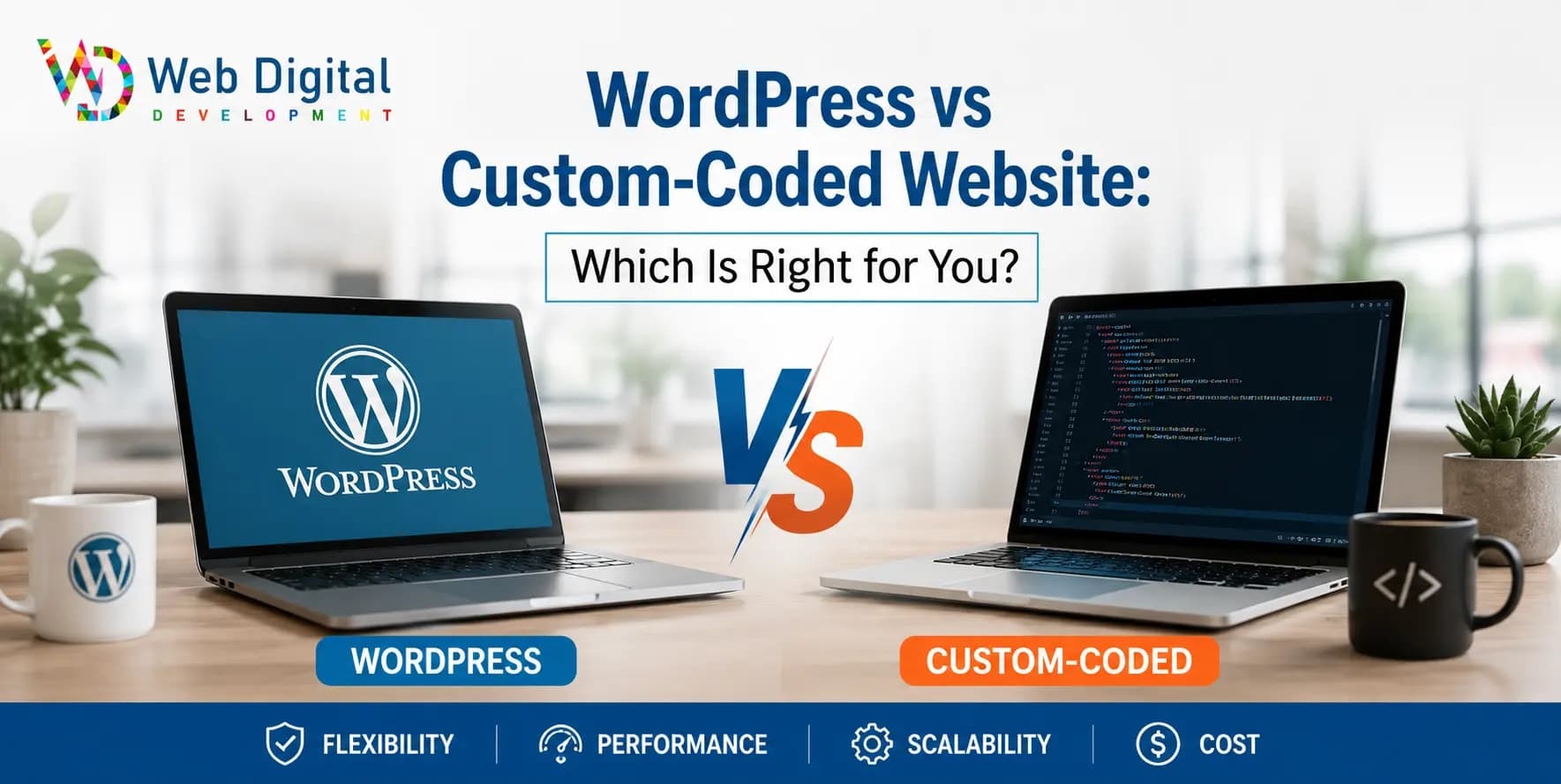

Which platform should you choose for your business site? Next.js for speed and custom features. WordPress for easy editing. Here's the real comparison.
You're building a website. Someone recommends WordPress. Someone else says Next.js. Which is right for you? It depends on what your business actually needs.
WordPress
Best for: Blogs, content-heavy sites, sites your team will edit frequently.
Pros:
- Easy to edit content — no coding needed
- Huge ecosystem of plugins for almost anything
- Cheap hosting (₹200-500/month)
- SEO-friendly out-of-the-box (with plugins)
- Familiar to most developers
Cons:
- Gets bloated with plugins — slow if not maintained
- Security requires constant updates
- Not ideal for complex custom features
- Can feel outdated visually if you don't invest in a good theme
Cost: ₹200/month hosting + ₹0-5,000 one-time for custom theme + ongoing maintenance.
Next.js
Best for: Fast sites, e-commerce, custom web apps, sites you want to own completely.
Pros:
- Lightning fast — pages load in milliseconds
- Modern, clean code — easy to scale
- Custom design without plugin limitations
- SEO built-in (server-side rendering)
- No plugin bloat
- Free hosting tier (Vercel) for most businesses
Cons:
- Requires a developer to update content (unless you add a CMS)
- Higher initial dev cost
- Smaller ecosystem than WordPress
- Learning curve for non-technical teams
Cost: ₹30,000-75,000+ upfront + ₹0-2,000/month hosting (Vercel or AWS).
The decision tree
Choose WordPress if: You want to blog frequently, you're budget-conscious, your team will edit content, you want a familiar platform, you need plugins for specific features.
Choose Next.js if: Speed is critical, you want custom design, you have a developer on staff or budget for updates, you want to avoid plugin bloat, you're building an e-commerce or membership site.
The hybrid approach
Next.js with a headless CMS (like Contentful or Sanity). You get Next.js speed with an editor-friendly backend. Cost: ₹40,000-80,000 upfront, but faster updates.
What we recommend
For 80% of Delhi businesses: Next.js with a simple CMS (or static content). You get speed, modern design, and SEO. For blogs, add a simple blog CMS on top.
For content-heavy businesses (publishers, agencies, news sites): WordPress with a custom theme. The plugin ecosystem is unbeatable.
The best platform is the one your team will actually maintain and keep updated.