A sequenced first-year checklist for Indian startups — from business registration to domain, website and marketing — so you set up in the right order.
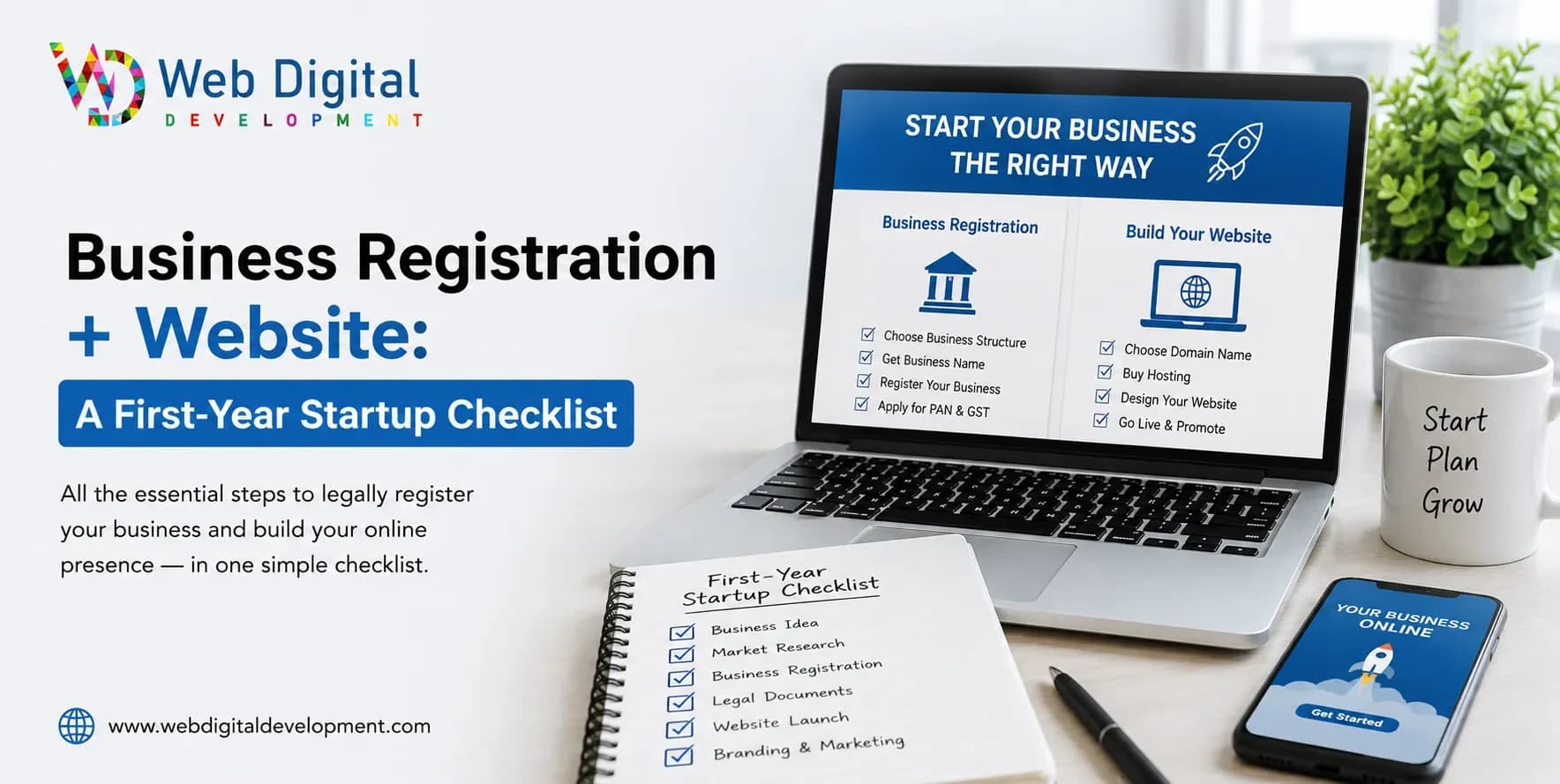
Starting a business in India in your first year means juggling registrations, a brand, a website and marketing — often with no idea what order to do them in. Getting the sequence right saves money and headaches. This startup registration and website checklist lays out a sensible first-year path, from legal setup through to your first customers, so nothing important is skipped or done out of order.
What do I need to register a startup in India?
It depends on your structure, but most startups consider a business entity (such as a Private Limited company or LLP), a PAN and TAN, GST registration if applicable, and a bank account in the business name. MSME registration is optional but useful. Decide the structure first, since later steps depend on it.
Do I need to register my business before building a website?
Not strictly, but registering first is wise. A registered name lets you secure a matching domain, open a business bank account, accept payments cleanly, and issue proper invoices. You can build a website before registering, but aligning the legal name, domain and branding from the start avoids costly rework later.
The right order for year one
- Decide your structure — sole proprietor, LLP or Private Limited.
- Register the business and obtain PAN, TAN and GST if needed.
- Secure your domain matching the business name early.
- Sort branding — logo and basic identity.
- Build your website on that domain and brand.
- Launch marketing — SEO, Google Business Profile and ads.
What is MSME registration and do I need it?
MSME (Udyam) registration recognises your business as a micro, small or medium enterprise. It is free, quick, and unlocks benefits like easier access to certain loans, subsidies and government tender preferences. It is not mandatory, but for most small startups the benefits outweigh the minimal effort, so it is usually worth doing.
Where does the website fit in the timeline?
Build your website once your business name and domain are settled and you have basic branding. This way your site carries the correct legal name, a matching domain and consistent branding from day one. Launching the website then becomes the hub that your Google Business Profile, social pages and ads all point to.
When you reach the website stage, our website design service can take you from blank domain to a credible online presence, and you can explore our full range of services or talk through your launch plan with us.
What comes after the website launches?
Once live, set up your Google Business Profile, claim social handles, and start basic SEO and content so customers can find you. Add a simple system to capture and follow up on enquiries. The website is the foundation; consistent marketing on top of it is what turns your first-year setup into actual customers.
What digital tools should a new startup set up?
Beyond the website, set up a few essentials early: a professional email on your domain, a Google Business Profile, social handles matching your brand, a simple way to capture and track enquiries, and basic analytics. These low-cost tools make you findable, credible and organised from your very first month of trading.
A new business does not need expensive software to look professional and stay on top of leads. Start with domain-based business email and a Google Business Profile so customers can find and contact you. Claim your social handles even before you use them heavily, to protect your brand name. Add basic website analytics so you can see where visitors come from, and a straightforward system — even a shared spreadsheet or a free CRM — to log and follow up on enquiries, since lost leads are simply lost revenue. Get these foundations in place alongside your website, and you enter your first year findable on search, credible to customers, and organised enough not to drop the opportunities your marketing brings in. Most of these tools are free or nearly free to start.
Frequently asked questions
Should I register as a Private Limited company or stay a proprietor?
It depends on your goals. A sole proprietorship is simplest and cheapest for testing an idea. A Private Limited company offers limited liability and is better for raising investment and looking credible, but involves more compliance. Many founders start simple and incorporate once the business proves itself. Consult a professional for your situation.
Can I build my website while registration is still in progress?
Yes, you can start design and content while paperwork processes, as long as the business name is decided so the domain and branding align. Just hold final launch until you can use the correct legal name and accept payments properly. Parallel-tracking the website saves time without creating conflicts.
How long does business registration take in India?
It varies by structure. A proprietorship can be effectively ready quickly, while a Private Limited company typically takes a couple of weeks once documents are in order. GST and other registrations add time. Start early and in parallel with branding and website planning so legal delays do not stall your launch.
Do I need a website in my very first year?
For almost every business, yes. A website builds credibility, helps customers find you on Google, and serves as the hub for all your marketing. Even a simple, fast site in year one pays back through trust and enquiries. It is one of the highest-value early investments a new business can make.